Reading Football Odds Movements Without Assuming a Guaranteed Outcome
Football odds can move before kick-off and throughout a live match. The change tells you that the market price has shifted, but it does not tell you the full reason and it does not guarantee the result. You need the correct fixture, market, line and time before the movement means anything.
Make sure you compare the same market
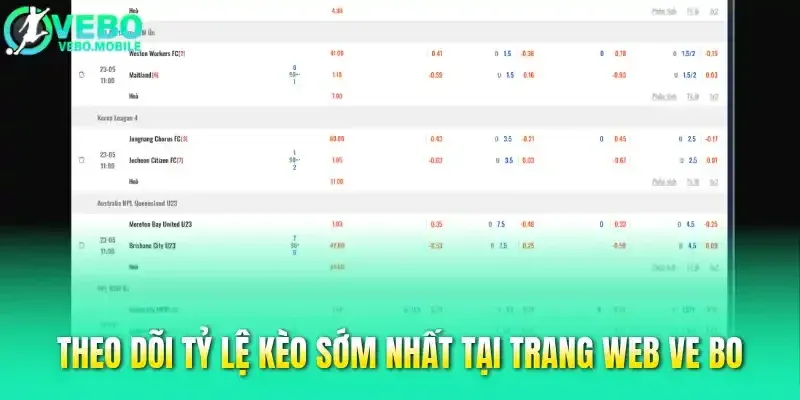
When you use Vebo to monitor odds, record the teams, competition, market and time of each check. Compare match winner with match winner, Over 2.5 with Over 2.5, and a first-half market with the same first-half market. If one detail changes, you may no longer have a true price comparison.
Check the odds format as well. Decimal, fractional and American odds can describe the same price in different ways. Set one format and keep it throughout your review so the display does not create a false impression of movement.
Separate a price change from a line change
The line states the condition of the wager, while the price determines the potential return. For example, a move from 2.05 to 1.80 on Over 2.5 goals changes the price but keeps the goal line at 2.5. The possible return falls, although the match still needs at least three goals for that selection to win.
A move from Over 2.5 to Over 3.0 changes the line itself. That difference matters because three goals produce different settlement outcomes on the two lines. Read the full market name every time; the colour of an arrow or the direction of a price does not explain the whole change.
Look for possible reasons without inventing one

Team news, injuries, weather, heavy market activity and a provider's own adjustments can all influence a price. A sudden movement may attract attention, but the chart alone cannot prove which factor caused it.
Check reliable team updates and the timing of the move. If the odds changed before any public line-up announcement, do not claim that the final team caused the movement. Describe the cause as a possibility unless a credible source confirms it.
Distinguish pre-match movement from live movement
Opening odds give you an early reference point, while the current odds show the latest available price. The closing price gives you the final pre-match reference. Compare these stages carefully because each one reflects information from a different point in time.
Live odds react to the score, match clock, cards, substitutions and the flow of play. Do not compare a live price with a pre-match price as though nothing changed. Once the match starts, the market works with a new set of conditions.
Use the odds page as a signal to investigate
A Tỷ lệ kèo update can show that the market has moved, but it cannot tell you to copy the movement blindly. Recheck the line, price, match period and timestamp. Then review any fresh information that could affect your original assessment.
Short odds still lose, and long odds still win. The market expresses a price for uncertainty; it does not remove uncertainty. A popular selection can shorten and still fail because football matches contain injuries, errors, refereeing decisions and other events that no price can guarantee.
Read the settlement conditions before you act
Check whether the market covers regular time only or includes extra time and penalties. Also review the provider's rules for postponed or abandoned matches. The score page tells you what happened on the pitch, while the market rules tell you how the provider settles the wager.
If you use handicap quarter lines, learn how they work before you place the selection. A quarter line divides the stake between two adjacent lines, so one match can produce a full win, half win, half loss, push or full loss. The exact outcome depends on the line and final score.
Decide whether the current price still suits your view

An earlier price may disappear before you confirm the wager. Review the latest selection screen and check the fixture, market, line, odds and stake again. If the new price no longer offers the return you expected, leave it instead of chasing the old figure.
Keep the accepted wager and transaction reference if you proceed. They show the exact terms the provider accepted, while a screenshot from an odds comparison page may show a different time or price.
Control the amount you risk
Set a fixed budget and use money you can afford to lose. Do not raise the stake because the odds shortened or because many people appear to support one side. Market movement can guide further research, but it should never push you beyond your limit.