How Economic Uncertainty Affects Investment Decisions

How economic uncertainty influences investment decisions
Causing people to think twice about their investments because of increasing economic uncertainty and sudden interest rate adjustments is unexpected inflation data making global equity markets down 4% in a single week. Major exchanges are worried about this, leading to people wanting to understand how market volatility impacts their investing choices to ultimately make better choices to ultimately keep their money safe. Many seasoned investors will likely adjust by reviewing their asset distribution, adjusting their risk tolerance, and not making emotional choices based on short-term fluctuations. Keep reading to see how people ultimately make these adjustments when they face market uncertainty.
Emotional Traps That Derail Investor Portfolios
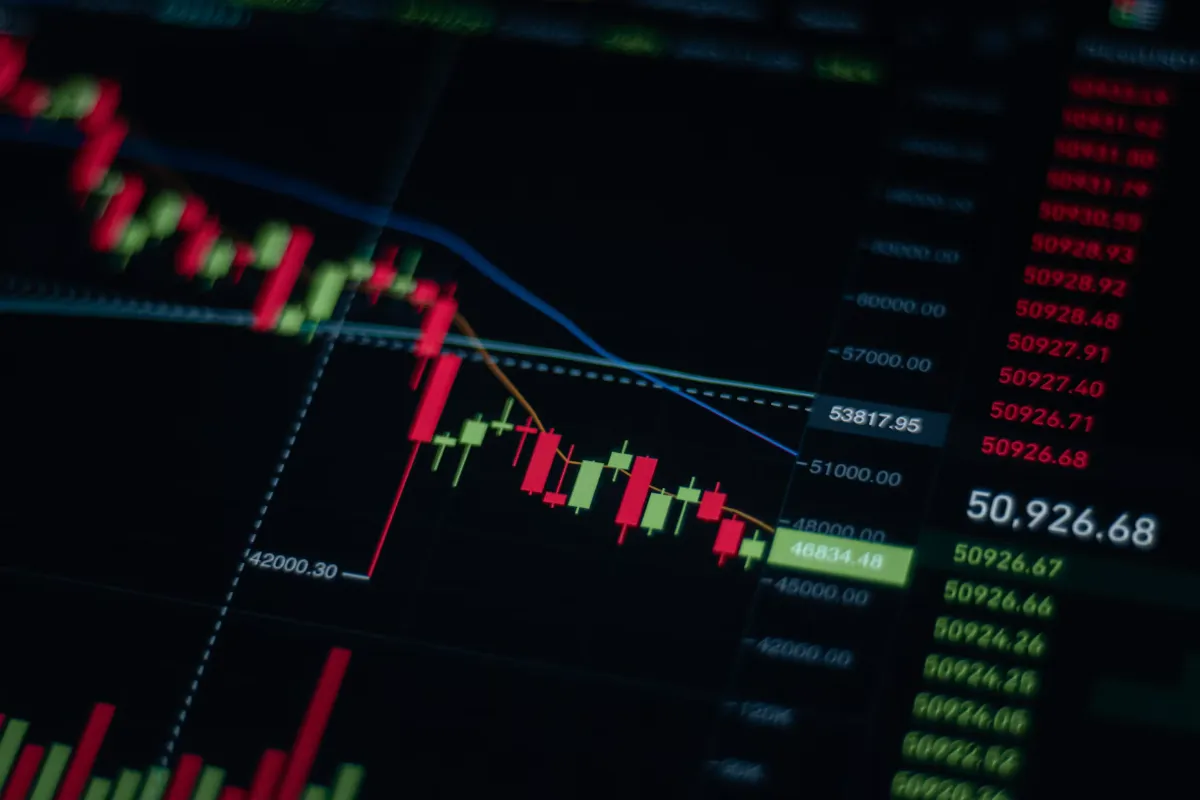
Because of recency bias, many individuals react emotionally to dramatic stock drops and feel the need to sell without properly analyzing the situation. Even professional investors can have a difficult time staying calm if they lose tens of thousands of dollars in their retirement funds. Seeing a graph drop turns many to feeling distressed and feeling that they must sell a great stock for a low price.
After the market closes many individuals relax by going to (Arabic: Melbet تسجيل الدخول ) to see live soccer bets with quick payouts rather than trying to wait and see if they can buy in for a lower price after a significant selloff.
Due to this recency bias, many individuals feel that the negative situation they are currently facing will persist. They decide to quit their original long-term plan as they feel that stock prices dropping will now be the new standard. Other individuals might want to quickly “get back on the game” by investing in speculative stock after a short period of relief.
This can result in significant losses or finding the chance to invest in a stock that is significantly undervalued.

Defensive Assets That Attract Capital During Turbulence
If investors are uncertain about the future earnings of a stock, they will likely shift from growth stocks to safe investments that prioritize consistent cash flows and preserving their money instead of growing exponentially in value.
During times of economic uncertainty, many investors are likely to favor the following:
-
Treasury Bills - This option features safe government debt with a guaranteed principal and consistent interest distributed based on the nation’s credit
-
Gold Bullion - During unexpected inflation or other issues that make currency less valuable, people can use gold to retain their purchasing power
-
Consumer Staples Stocks - From toiletries to food, this type of stock will typically maintain consistent income even during economic slowdowns
-
Money Market Funds - Offering both competitive interest and immediate access to funds, this option allows individuals to stay nimble until they know what to do with their money
By shifting to these “safe” investments, people can minimize how much they lose if the overall economy dips. Not only do these investments provide consistent returns, but they also allow people to keep some funds available to re-invest later.
Corporate Spending and Central Bank Signals
Economic fog changes how business executives deploy company cash and how policymakers set borrowing costs. Both forces directly reshape stock valuations and bond yields across global financial markets.
Why Companies Freeze Hiring and Capital Projects
Seeing early indications of a potential slowdown, CFOs are tightening company budgets. They are holding back on opening new factories, updating software, and even as they are being more selective about posting new jobs to stay on their budget. Because borrowing is more expensive, companies are less inclined to take on any new debt in order to grow.
Just like investors, financially focused sports enthusiasts are seeking the most budget-friendly options. They are opting to use (Arabic: Melbet تحميل ) because of its seamless experience, live odds, and fast payouts. Rather than expanding into new territories, people are prioritizing expense reduction in order to maintain their profits.
During quarterly earnings, investors are becoming increasingly aware of these conservative strategies as they see their companies tighten their budgets even further by halting any stock buybacks in order to maintain additional liquidity on their balance sheets. Due to reduced company spending, many industrial suppliers are experiencing decreased growth as they rely on their supply chains. During these budget-friendly periods, investors are generously giving companies high free cash flow and little to no debt credit.
How Interest Rate Shifts Reshape Asset Valuations
Changes to the cost of money (for government bonds, business loans, mortgages, etc.) are ultimately controlled by the central bank. By increasing rates to curb inflation, investors ultimately find that their future profits are “less worth” today’s dollars. Depending on the uncertain economic environment, changing monetary policy can lead to the following:
-
Growth Stock Compression - Stocks of tech companies (primarily those that are the most profitable far into the future) significantly drop
-
Bond Price Swings - Based on newly issued bonds with higher coupon payments, old fixed-rate bonds become less valuable
-
Currency Volatility - Due to increased interest in the domestic currency by international investors, the exchange rate can significantly rise
-
Real Estate Slowdown - Due to more expensive mortgages, there is less demand for homes and less overall commercial real estate turnover
By staying on top of central bank news, people can predict which industries will either benefit or suffer, and by limiting the time horizon of their investments, people can avoid being caught off guard by sudden changes in borrowing costs.
Comparing Bull Market and Uncertain Market Strategies
Successful investors change their playbook depending on whether the broader economy is expanding or contracting. Clear differences separate aggressive growth tactics from defensive capital management across key portfolio areas:
|
Portfolio Element |
Calm Expansion Phase |
Uncertain Economic Phase |
|
Equity Selection |
High-growth tech and small-cap stocks |
Profitable dividend payers and utilities |
|
Cash Allocation |
2% to 5% for routine expenses |
15% to 25% for liquidity and dips |
|
Debt Exposure |
High-yield corporate bonds |
Short-term government treasury notes |
|
Rebalancing Pace |
Semi-annual or annual adjustments |
Monthly reviews to trim excess risk |
Adapting your asset mix keeps risk levels aligned with changing economic conditions. Sticking to a rigid bull-market strategy during a slowdown exposes savings to unnecessary volatility.
Dollar-Cost Averaging Beats Timing Market Bottoms
Trying to guess the exact bottom of a market correction fails almost every single time. Even veteran hedge fund managers rarely time major market reversals with consistent accuracy. Missing just the ten best trading days over a twenty-year span can cut total portfolio returns in half. Because the strongest rebound days often happen right next to the worst drops, sitting in cash carries huge opportunity costs.
Automated monthly contributions solve this timing dilemma completely. Investing a fixed dollar amount every two weeks buys more shares when prices fall and fewer when prices rise. This steady routine lowers your average cost per share without requiring stressful daily chart watching. Consistent buyers build larger positions during downturns that pay off handsomely when markets recover.
Global Diversification Reduces Single-Country Shocks
Due to global economic downturns, no international economy will directly suffer the same impact. For example, you could find that in one part of the world, the unemployment is high while in another part of the world, the economy is struggling. You also will not typically feel inflation across the entire planet at the same time. By only investing domestically, you are putting yourself at risk for having negative impacts due to how their government handles its economy. By utilizing foreign bonds and international stocks, you will ultimately be able to smooth out your investments over time regardless of whether specific parts of the planet are gaining or losing.
Beyond smoothing out the impact of specific economies performing in one area, you also will be able to limit the impact of changes in the value of your currency should it drop. Through using a global index fund, you can directly invest in thousands of different firms across the planet - from emerging markets to Asian and European firms. By spreading yourself across different parts of the world, you can be sure that whatever storm is happening economically in one region will not impact every single investment you have across the planet.
Staying Disciplined Through Market Storms
One thing to know about the stock market globally is that being uncertain is normal - it does not happen occasionally. If you want to be prepared for future economic struggles, ensure you have at least six months of living costs in liquid cash (available if needed). Keep contributing to diversified index funds - do not attempt to respond to every daily update about the economy. By being patient and establishing rules, you will find that periods of uncertainty often become some of the best times to grow your money.