8xbet Football Betting in Nigeria: Odds and Markets Explained

8xbet Football Betting in Nigeria: A Beginner’s Guide to Odds and Markets

Anyone exploring football betting on 8xbet should start with the basics rather than rush into a selection. Football betting can look more complicated than the match itself when you first open a betting slip. A single fixture may come with choices such as 1X2, Double Chance, Over 2.5 Goals and Both Teams to Score, each with a decimal price beside it.
Football is widely followed in Nigeria, so predictions about matches are familiar territory for many fans. Betting simply adds money to those predictions. If you are new to the football betting Nigeria scene, the basics are simpler than the menu can make them look. The first step is understanding the odds, stakes, settlement rules and what each market means before your money goes on the line.
How Football Betting Works
Every football bet starts with a prediction, but the market determines exactly what that prediction means. You are not simply betting on a match; you are choosing one defined outcome within it.
The basic process is:
-
Choose the fixture.
-
Select the market that matches your prediction.
-
Check the odds on that selection.
-
Enter the amount you want to stake.
-
Review the fixture, market, odds and stake before confirming.
Suppose you think the home side will win. Selecting Home in the 1X2 market means that team must finish as the winner. Choosing Home or Draw under Double Chance is different because a draw also keeps the selection alive. Two selections can involve the same team and match but settle differently, so always know what result or event the bet requires.
The odds show the potential return attached to that selection. Your stake is the amount of money you choose to risk. If the selection loses, the stake is normally lost. If it succeeds, the return is calculated from the stake and the odds on the bet.
Understanding Football Betting Odds
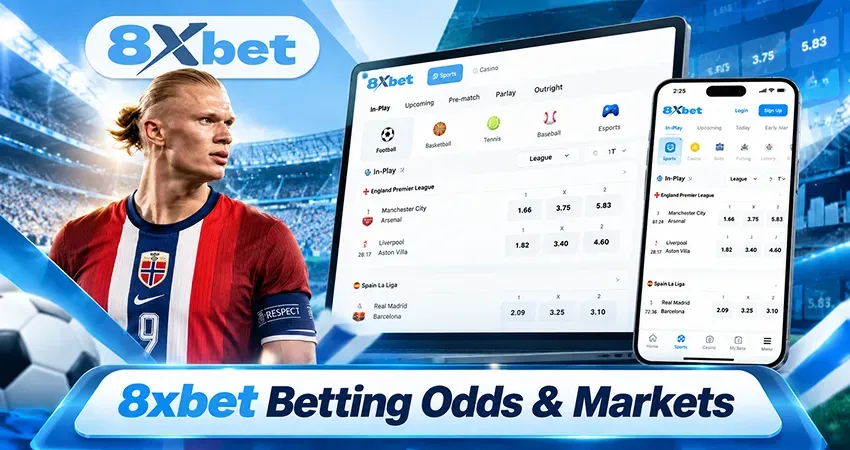
One point commonly missed if you’re a beginner to football betting is the difference between return and profit. Odds show the price attached to a selection and determine the potential return if it wins. Decimal odds usually appear as numbers such as 1.60, 2.10 or 3.50. They show the total potential return for each unit staked, including the original stake.
For example, If you stake ₦1,000 at odds of 2.00, the potential total return is ₦2,000. Your original ₦1,000 is already included, so the potential profit is ₦1,000.
Higher odds produce a larger potential return for the same stake, but they are not a promise that an outcome will happen. Prices can also move as new information becomes available or market conditions change.
Simple Odds and Potential Return Example
Stake × decimal odds = potential total return
Suppose you stake ₦2,000 at odds of 2.20.
|
Item |
Figure |
|
Stake |
₦2,000 |
|
Decimal odds |
2.20 |
|
Potential total return |
₦4,400 |
|
Potential profit |
₦2,400 |
The ₦4,400 is the total amount returned if the selection wins. To work out the profit, subtract the original ₦2,000 stake.
When checking football odds Nigeria, this same calculation applies. A large return figure may look attractive to you, but know that part of that amount is simply your stake coming back.
Popular Football Betting Markets in Nigeria

Football betting markets are different ways of defining what you expect to happen during a match. Some focus on the final result, while others are based on goals or cover more than one possible outcome. As a beginner in football betting, you do not need to learn every market at once. These four appear regularly and provide a good starting point.
1X2 Match Result
The 1X2 market covers the three possible match results:
-
1: home team win
-
X: draw
-
2: away team wins
If you select 1, the home side must win for that selection to succeed. A draw or away win means the bet loses.
A standard 1X2 bet is usually decided by the score at the end of the normal 90 minutes, including added time. Extra time and penalty shootouts don’t count unless the bookmaker has a separate market for them.
For example: If a match ends 1-1 after 90 minutes but one team wins 2-1 in extra time, the 1X2 bet is still settled as a draw (X).
Over and Under Goals
Over/Under is based on the total number of goals scored by both teams. A common line is 2.5 goals.
If you select Over 2.5, the match needs at least three goals. Scores such as 2-1, 3-0 or 2-2 would qualify. Under 2.5 means the match must finish with no more than two goals, such as 0-0, 1-0 or 1-1.
The half-goal removes the possibility of landing exactly on the line, so the bet has a clear Over or Under result.
Both Teams to Score
Both Teams to Score, often shortened to BTTS, asks whether each team will score at least once.
A Yes selection succeeds if both sides score. A No selection succeeds if at least one team fails to score. The final winner does not matter to this market. A 1-1 draw and a 3-1 home win would both settle as BTTS Yes. A 0-0 or 2-0 result does not.
Double Chance
Double Chance combines two of the three possible 1X2 match results into one selection:
-
1X: home win or draw
-
X2: draw or away win
-
12: home win or away win
If you choose X2, the selection succeeds if the match ends in a draw or the away team wins. Because two outcomes are covered, the odds are usually lower than a straight 1X2 selection.
Pre-Match Betting vs Live Betting
Pre-match betting happens before kick-off. You choose from the markets and odds available before the game starts, which gives you time to check team information and think through the selection without the pace of a live match.
Live betting, also called in-play betting, takes place after the match has started. The available odds can move as the game develops. A goal, red card, the scoreline, time remaining and other match events can affect how outcomes are priced.
Imagine a strong favourite conceding after ten minutes. That team now has less time to recover and must come from behind, so its live price may move. Goals, red cards, injuries and the amount of time remaining can all affect in-play odds.
The faster movement is the main difference. A selection that was available at one price before kick-off may look very different after 30 or 60 minutes. Live betting also creates more pressure to make quick decisions, so it is worth knowing exactly which market you are selecting before confirming a stake.
What to Check Before Placing a Football Bet
Knowing the market is only one part of the decision. Football changes quickly, and information around a fixture can change how you view it.
Before placing a bet, check:
-
Team news: Confirm likely line-ups, suspensions and important absences where reliable information is available.
-
Injuries: Missing players can affect a team differently depending on their role and available replacements.
-
Recent form: Look beyond one result. A short run of matches can provide more context, although past form never guarantees the next outcome.
-
Competition context: A league game, cup tie or two-legged fixture may create different priorities for a team.
-
The selected market: Make sure the market actually matches your prediction. Thinking a team will “do well” is not the same as deciding whether you are backing them to win, avoid defeat or score.
Good preparation cannot remove the risk from betting. Its value is simply that your decision is based on information rather than a rushed guess. A team may have won four of its last five matches, but that does not make every market connected to that team attractive. The principle is straightforward: research can inform a sports betting decision, but no statistic or form table guarantees the next result.
Common Beginner Mistakes
Many early mistakes come from misunderstanding the bet itself, not from failing to predict the match. One common example is choosing the wrong market. You may intend to back a team not to lose but accidentally select a straight win instead of Double Chance.
Another is confusing total return with profit. Decimal odds include the original stake in the return figure, so the amount shown on the slip is not all profit. It is also easy to ignore an odds change. A price seen earlier may have moved by the time you are ready to bet, so check the final slip instead of relying on what you remember.
A more serious mistake is chasing losses. Losing one bet does not make the next one more likely to win. Increasing a stake simply to recover previous losses only puts more money at risk.
As a beginner, you need to avoid treating a match as certain. Strong favourites lose, late goals happen and red cards can change games quickly. No football result is guaranteed.
Responsible Football Betting
Every football bet involves the possibility of losing the full stake. Betting should be treated as entertainment rather than a reliable source of income. Set a spending limit before you start and use only money you can afford to lose. Money needed for rent, food, transport, bills, debt repayments or other essentials should stay outside a betting budget.
Time limits matter too. Decide in advance how much time and money you are prepared to spend. Avoid borrowing money to gamble, and do not increase your stake simply to recover an earlier loss. If betting begins to affect your finances, work, relationships or wellbeing, stepping away and seeking support is more important than placing another bet.
Conclusion
Football betting becomes easier to understand when you separate it into three basic parts: the market, the odds and the stake. The market tells you what needs to happen. The odds determine the potential return. The stake is the amount of money you are risking.
Team news, injuries, recent form and competition context can help you make a more informed decision, but none of them can remove the uncertainty from football. Read the market carefully, understand what the return figure means and keep every stake within an amount you can afford to lose.