The BTTS Paradox: Why Dominant Possession Teams Concede the Most Predictable Counter-Attack Goals


1. The Illusion of Safety: Why 70% Possession Guarantees Transition Chaos
There is a recurring scenario in modern top-flight football that baffles casual supporters every weekend:
An elite team—chock-full of international superstars—hosts an underdog fighting against the drop. As expected, the heavy favorite completely suffocates the pitch, pinning the away side deep into their own defensive penalty area. They create chance after chance, inevitably scoring twice before the hour mark.
Yet, on the 70th minute, the underdog hits a single hopeful clearance. A pacey winger sprints into thirty yards of completely unoccupied green grass, squares the ball across the face of goal, and taps it in. The match ends 2-1 or 3-1.
The home team collected all three points, but those who anticipated a comfortable clean sheet walk away stunned.
Why do the most dominant attacking sides in European football concede such laughably soft goals to teams that barely cross the halfway line?
The answer lies in a tactical structural reality that performance analysts call The Possession Paradox: the more bodies you commit to pinning an opponent into a low block, the more mechanically fragile your own rest-defense becomes.
2. The Structural Mechanics of "Both Teams to Score" (BTTS) Matchups
Goals scored at both ends of the pitch are rarely the result of balanced end-to-end chaos. Instead, they are typically manufactured by extreme tactical asymmetry.
When evaluating whether a fixture is primed for goals at both ends, analysts look for two specific tactical vulnerabilities:
Inverted Full-Backs and the Compromised Half-Spaces
To dominate central midfield passing lanes, modern tactical setups instruct full-backs to tuck inside as auxiliary central midfielders during possession phases. While this creates a numerical overload in central zones, it completely vacates the wide defensive channels. If the opponent wins possession and bypasses the initial counter-press with a single diagonal pass into the abandoned flank, the center-backs are forced to sprint horizontally toward the touchline, leaving the penalty box completely unprotected.
Counter-Pressing Decay in the Final 25 Minutes
An intense counter-press—demanding immediate three-second swarms upon losing the ball—is physically exhausting. Between the 65th and 90th minutes, pressing triggers inevitably degrade by a fraction of a second. That split-second delay allows the defending underdog to lift their head, spot the runner, and execute direct transition balls into isolated foot races against isolated defenders.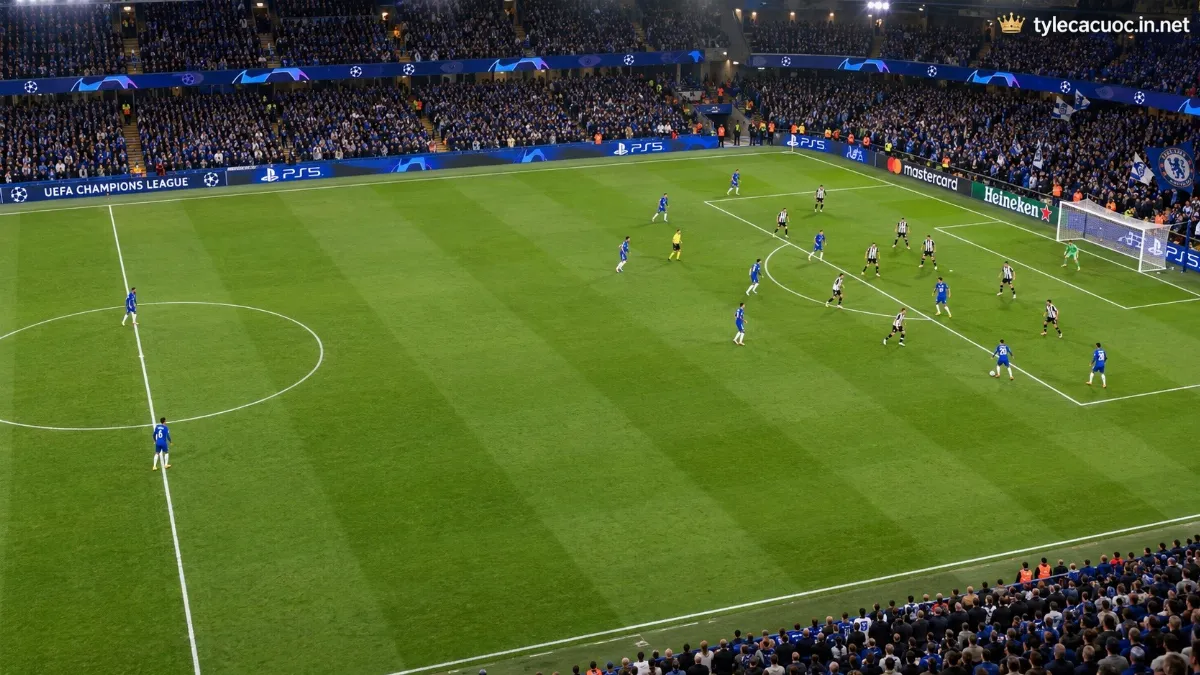
3. Reconciling Tactical Friction with Objective Probability Models
While the general public evaluates "Both Teams to Score" by merely checking whether both clubs have popular strikers in their starting lineups, quantitative models evaluate spatial geometry and turnover turnover profiles.
A matchup between an aggressive, high-line favorite and a lightning-fast transition underdog generates a uniquely stable scoring profile:
-
The favorite possesses too much individual quality not to breach the low block over 90 minutes;
-
The underdog’s entire tactical strategy is optimized to exploit the single structural flaw that the favorite’s system deliberately accepts.
Filtering Implied Probabilities on Regional Data Boards
This is where tracking specialized probability feeds provides immense clarity. Monitoring live liquidity and regional indicators—particularly across localized databases tracking real-time tỷ lệ cá cược updates—frequently exposes when algorithmic indices anticipate goals at both ends despite a lopsided team matchup. When an objective index aggressively prices a favorite's clean sheet as an unlikely outcome, the model has recognized that the underdog’s vertical pace matches up perfectly against the favorite’s sluggish recovery defenders.
4. The Personnel Variable: When Missing Anchors Unlock Both Ends
Even the most extreme tactical structures require elite individual execution to survive transition risks. A team playing an aggressive high line can mask its spatial vulnerabilities if they possess a world-class defensive midfielder capable of covering ground and committing tactical fouls before transitions ignite.
However, when that defensive anchor is absent, the entire systemic balance collapses.
The Domino Effect of Squad Rotations
If an elite attacking side is forced to deploy an attack-minded playmaker in the defensive midfield pivot due to fixture congestion, their offensive chance creation remains elite, but their transition defense disappears. The probability of both teams scoring surges exponentially.
Verifying Lineup Dynamics Before Kickoff
Before finalizing any match projection, mathematical probability distributions must be grounded in verified tactical intelligence. Cross-referencing raw metrics with detailed match previews, confirmed starting XIs, and tactical personnel breakdowns on vetted tactical data hubs ensures you know exactly who is tasked with stopping the opposition’s primary transition threats. If the tactical preview reveals that the heavy favorite is starting two backup central defenders with zero recovery pace, banking on a one-sided clean sheet is an analytical disaster.
5. The 3-Point Tactical Diagnostic for Both Teams to Score
To accurately forecast matches where goals will flow at both ends, apply this three-step tactical filter:
-
Audit the Defensive Recovery Pace: Compare the sprint speed of the favorite’s central defenders against the top-end speed of the underdog's wingers. If a 33-year-old center-back is defending fifty yards of open space against a 22-year-old speedster, the favorite will concede a high-quality transition chance.
-
Measure Direct Speed, Not Total Possession: An underdog that holds 30% possession but moves the ball toward goal at over 3.5 meters per second is far more dangerous than a possession team that passes backwards. Rapid verticality creates high-xG moments.
-
Check the Game State Urgency: If the away underdog desperately needs points to avoid relegation, they will commit players forward on counter-attacks rather than playing for a polite 1-0 defeat. Desperation creates space, and space creates goals at both ends.
Football is rarely a symmetrical contest. When you understand that extreme attacking dominance inherently breeds defensive exposure, you stop treating goals conceded by top clubs as random accidents—and start seeing them as the natural byproduct of modern tactical architecture.