Nigerians are embracing mobile apps for everyday entertainment for various reasons.
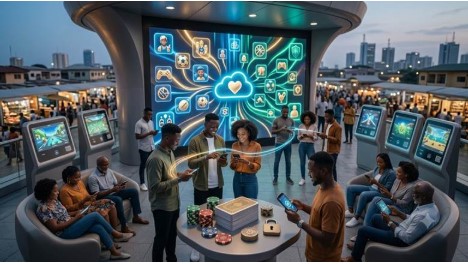
Becoming entertained in Nigeria used to be synonymous with watching TV or going to a movie theater. It’s comfortable in a pocket these days. From watching a football match to playing a quick mobile game between errands, the smartphone is Nigeria’s primary screen for millions of users and how they spend their leisure time.
This change has not taken place in one single instant but has come at a much quicker rate over the last 3 years.
Nigeria’s Mobile-First Digital Culture
Nigeria is the most youthful and networked in Africa. With the introduction of the mobile phone before the majority of Nigerian households had a reliable Internet or personal computer, mobile apps are the main source of news, music, banking and entertainment.
This mobile-first phenomenon influenced consumer behaviors in a certain manner. Users in Nigeria did not expect to adapt desktop platforms for their mobile devices, they grew up with the expectation that it is a mobile experience that’s expected, not an afterthought.
This trend was driven by lower-cost Android phones, urban rollout of 4G networks such as in Lagos, Abuja, and Port Harcourt, and lower data prices. The overall trend in Africa’s smartphone usage is the same, however the huge population of Nigeria makes it one of the most important smartphone-first markets in Africa.
Fun at your fingertips
Electronic entertainment in Nigeria has now branched to multiple categories that were previously confined on their own devices or places. For many homes, the cable company has been replaced by streaming services. Casual players switched from console games to mobile games.Mobile games took over from console games for casual gamers. For football fans, sports apps have replaced radio commentary to keep them up to date with live scores.
The Top Categories for the most engagement each day are the following:
- Streaming music and video: A wide variety of apps – such as Spotify, Boomplay and YouTube – dominate the listening and viewing habits of all age groups.
- Mobile gaming: both casual and competitive games are used for the purpose, especially during commute and in the lunch breaks.
- Sports and live scores: Football, the most watched sport, is followed with sports apps providing real-time updates during the game.
- Social and short-form videos: These platforms, which focus on bite-sized content, have been expanding their daily screen time share.
All of these vying for the same scarce attention span creates a challenge for developers to create faster, lighter applications that load rapidly, even on average broadband speed.
The reason for it is that Apps are replacing Desktop Services.
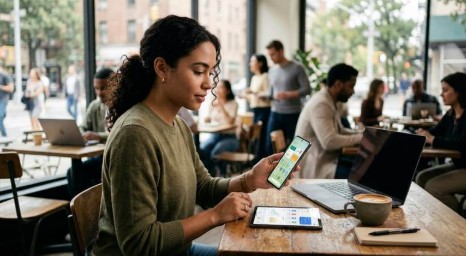
Mobile apps have been shown to be more effective than browser-based apps when it comes to dedicated apps. They load quickly, consume less data in the process, work better with phone functionality such as notifications, biometric logins, etc.
This is evident in the entertainment services designed for mobile use. The Pin-Up App is an example of dedicated entertainment apps that have been designed so that users prefer to download the app instead of accessing it in their browser, as it allows them to open content with less effort than accessing it via a browser, and makes the experience more consistent, even if they face poor network conditions.
Adoption of mobile apps in Nigeria has been similar to what has been observed across the rest of the continent – after using a good app, users will not want to go back to the browser. It’s especially important in places where data costs still make a difference in people’s budgets, and in general, native apps are more effective at doing what a mobile site does.
Security and User Experience
As adoption has increased, so have the concerns about security. With increasing numbers of Nigerians now keeping personal and financial data in entertainment apps, there has been an increasing appetite for protection of such data. Two factor authentication and privacy settings are more likely to keep users engaged as opposed to apps that are built with security elements as an afterthought.
Online entertainment apps have seen changing user priorities over the years from 2023 to 2026, as seen in the table below:
| Priority | 2023 Ranking | 2026 Ranking |
| Content variety | 1st | 2nd |
| App speed and reliability | 3rd | 1st |
| Data usage efficiency | 4th | 3rd |
| Security features | 5th | 4th |
Content variety is a measure of the maturity of the market and is measured by speed overtaking. With so many options to choose from, it is no longer about the content a Nigerian user can find, but rather which app can provide the best content.
What is Next for Mobile Entertainment?
Expansion of 5G in key Nigerian cities should provide additional cutting of buffering and loading delays, especially streaming platforms. Offline features are also being adopted by music applications, and are expected to be common on video and gaming, where connectivity isn’t reliable in urban areas.
Local content also continues to be gaining momentum. The more apps are focused on Nigerian music, Nollywood movies and local sports, the more likely they are to establish a daily habit than apps that are focused on international content.
Finally, Nigerians have made mobile apps their “home entertainment” and they are using their phones just how they’re used—quickly, often, and frequently while on the move. With the ever increasing connectivity, this “mobile-first entertainment” is set to grow, not diminish.